In today's fast-paced manufacturing environment, lifting solutions are crucial. The choice between vacuum lifts and mechanical clamps can significantly impact efficiency and safety. According to industry expert Dr. Emily Johnson, "Vacuum lifts streamline operations without compromising safety." This statement highlights the growing preference for vacuum technology in lifting applications.
Why choose a vacuum lift over traditional mechanical clamps? Vacuum lifts offer several advantages, including simplicity and versatility. Unlike mechanical clamps, they do not rely on complex mechanisms, which can fail at critical moments. This leads to a more reliable operation. Moreover, vacuum lifts adapt to various materials and shapes, making them suitable for diverse industries.
While mechanical clamps may still have their place, their limitations cannot be ignored. They often require adjustments and can damage sensitive surfaces. On the other hand, vacuum lifts provide a gentle yet secure grip. As we navigate these options, it's essential to reflect on how technology can enhance workflows. Embracing vacuum lifts may lead to greater productivity and safety in the long run.
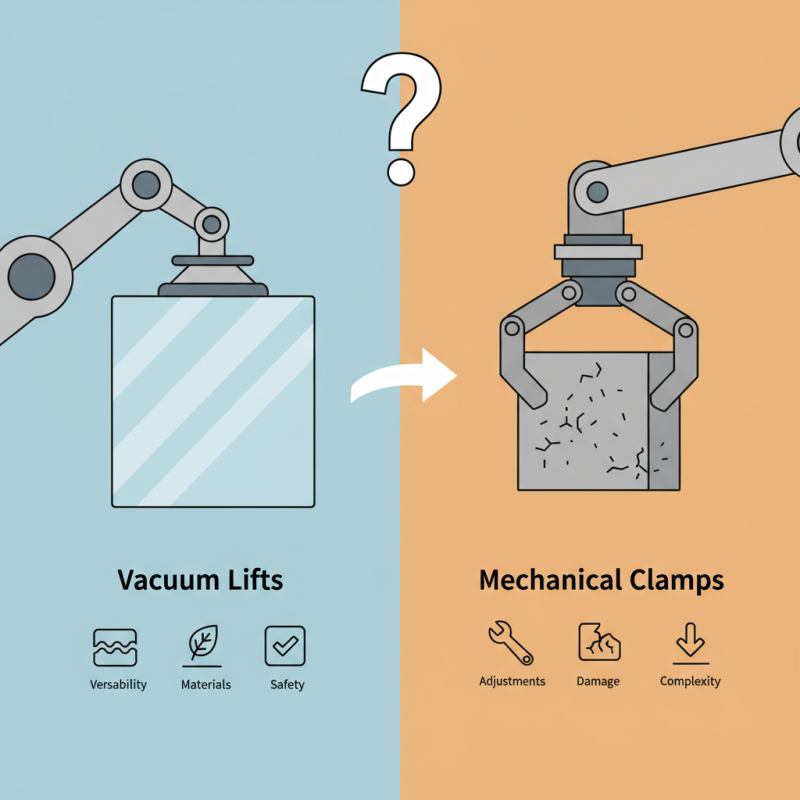
Advantages of Vacuum Lifts Over Mechanical Clamps
Vacuum lifts offer several distinct advantages compared to mechanical clamps in material handling. One key benefit is safety. According to the Occupational Safety and Health Administration (OSHA), over 30% of workplace injuries are related to lifting and handling. With vacuum lifts, operators reduce the risk of injury due to less physical strain and fewer pinch points associated with mechanical clamps. This protective feature not only enhances worker safety but also lowers insurance costs related to injuries.
Another advantage lies in efficiency. Vacuum lifts can move various types of materials, such as glass, metal, and composites, with ease. A report by the Material Handling Industry of America indicates that integrating vacuum lifting technology can increase productivity by up to 40%. Unlike mechanical clamps, which may struggle with materials of differing shapes and sizes, vacuum lifts maintain a consistent grip, allowing for quicker task completion and less downtime.
Finally, consider adaptability. Mechanical clamps can be cumbersome and less versatile. They may require specific adjustments for different tasks. In contrast, vacuum lifts adjust naturally to the surface of materials being handled. While vacuum systems do require an initial investment, the long-term savings in labor costs and increased throughput justify this expense. However, it’s crucial to remember that maintenance is essential. Neglecting regular check-ups can lead to inefficiencies, undermining the advantages provided.
Mechanism and Functionality of Vacuum Lifts
Vacuum lifts function through a simple yet effective mechanism. They use suction to grip and lift various materials, including delicate items like glass and heavy loads like metal sheets. This method reduces the risk of damage while enhancing safety. Reports indicate that vacuum systems can increase operational efficiency by up to 30%. Unlike mechanical clamps, which can apply excessive force, vacuum lifts provide a gentler handling of materials.
While vacuum lifts are increasingly popular in industries such as construction and manufacturing, it’s essential to ensure they are well-maintained. Regular checks on the vacuum seals and the power source are crucial. A minor leak can reduce efficacy. Studies suggest that proactive maintenance can extend equipment life by 20%.
**Tip:** Always train your staff on proper usage. Awareness of the limits and capabilities of vacuum lifts can prevent accidents and mishandling.
Vacuum lifts can assure reliability, but they are not without challenges. Operators may face issues with uneven surfaces that can disrupt the suction. Understanding the limitations helps mitigate risks. Regular training sessions can address these challenges effectively.
Comparison of Vacuum Lifts and Mechanical Clamps
This chart compares the performance metrics of vacuum lifts and mechanical clamps, highlighting aspects such as load capacity, energy efficiency, maintenance costs, and safety ratings.
Comparative Analysis: Vacuum Lifts vs. Mechanical Clamps
Vacuum lifts and mechanical clamps serve crucial roles in material handling. However, they have distinct differences that can influence operational efficiency. Vacuum lifts use suction to handle materials, which reduces the risk of damage. They are ideal for transporting fragile or smooth-surfaced items like glass or sheets of metal. In contrast, mechanical clamps rely on a gripping mechanism that might scratch or dent sensitive materials. Understanding these differences can help in selecting the right tool for your needs.
When considering equipment, think about the materials you frequently handle. Certain surfaces may benefit from vacuum lifts due to their gentle touch. A vacuum lift can be particularly useful in environments where time and safety are priorities. Operators can quickly lift and move items with little physical strain. It’s important to regularly maintain equipment to ensure optimal performance.
Tips: Always evaluate the load capacity before choosing a lift. Understand the surface type of materials to maximize efficiency. Moreover, regularly check your vacuum suction for leaks. This simple maintenance can prevent mishaps and ensure safety. If you find that your current solution isn’t meeting your needs, it might be time to rethink your choices. Adjusting your approach can lead to better productivity and safer operations.
Applications and Use Cases for Vacuum Lifts
Vacuum lifts have become a practical solution in various applications where lifting heavy loads is essential. Their design allows for efficient handling of materials like glass, metal sheets, and wooden boards without damaging the surface. The gentle grip of a vacuum is ideal for fragile items. It minimizes the risk of scratches or breakage, making it suitable for industries like construction and manufacturing.
In warehouses, vacuum lifts streamline operations. They reduce the need for manual lifting, which decreases injury risks. Workers can move loads quickly and efficiently. This increased productivity can significantly impact operational timelines. However, relying solely on vacuum lifts may lead to challenges. Proper maintenance and regular checks are necessary to ensure reliability. Failures can occur if the system is not carefully monitored, leading to costly downtime.
Moreover, vacuum lifts may not be suitable for all scenarios. Heavy objects with uneven surfaces can be problematic. The lift might struggle to maintain a secure grip. This limitation urges industries to continually assess their lifting methods. Moving forward, it remains crucial to understand the strengths and weaknesses of both vacuum and traditional mechanical lifting solutions.
Safety Considerations with Vacuum Lifts
Vacuum lifts are becoming a preferred choice in many industries for their enhanced safety features. When handling heavy loads, the risk of accidents increases significantly. According to a report from the National Safety Council, over 34,000 injuries occur annually from lifting operations. This alarming statistic underscores the need for safer alternatives. Unlike mechanical clamps, vacuum lifts distribute weight evenly, reducing the likelihood of dropping loads.
Moreover, vacuum lifts are designed with advanced safety mechanisms. They retain suction even in power failure situations. This redundancy can be a game-changer during a critical operation. In fact, a study by the Occupational Safety and Health Administration (OSHA) indicates that vacuum-assisted lifting systems can reduce workplace injuries by up to 50%. This contrasts sharply with mechanical clamps, where a malfunction can lead to severe incidents.
However, it's essential to note that no system is infallible. Regular maintenance and training are crucial for operators to ensure optimal performance. Some users report instances of suction loss due to debris or miscalculation. It's a reminder that while vacuum lifts offer significant safety advantages, continuous vigilance and adherence to best practices are critical. Balancing efficiency with safety should always be a priority in any lifting operation.
Why Opt for Vacuum Lifts Instead of Mechanical Clamps? - Safety Considerations with Vacuum Lifts
| Criteria |
Vacuum Lifts |
Mechanical Clamps |
| Safety |
Lower risk of damage to materials, customizable settings for different loads |
Higher risk of slippage and damage due to improper fitting |
| Versatility |
Can handle a variety of surfaces and shapes |
Limited to specific shapes and materials |
| Ease of Use |
Simpler operation with minimal training required |
Requires skilled operators for safe use |
| Maintenance |
Low maintenance with fewer mechanical parts |
Higher maintenance costs due to mechanical wear and tear |
| Overall Efficiency |
Higher efficiency with faster loading and unloading times |
Slower operation with potential for delays |
Conclusion
Vacuum lifts offer several advantages over traditional mechanical clamps, making them an increasingly popular choice in various industries. One key reason to ask "Why choose a vacuum lift over traditional mechanical clamps?" is their ability to handle delicate or non-uniform surfaces without causing damage. The mechanism of vacuum lifts utilizes suction to securely hold and lift items, ensuring stability and safety throughout the process.
In a comparative analysis, vacuum lifts demonstrate their superiority in versatility and efficiency, accommodating a wider range of materials and shapes while reducing the risk of accidents. Furthermore, their applications span numerous use cases, from manufacturing to logistics, highlighting their practicality across various sectors. Safety considerations are also critical, as vacuum lifts often include fail-safes and pressure monitoring systems, promoting a secure working environment. Overall, opting for vacuum lifts can significantly enhance operational efficiency and safety.

 Bendo Lift