A vacuum lift suction pad may look simple, but its service life depends on heat, dust, pressure, storage, and daily handling. What is the lifespan of a vacuum lift suction pad? There is no universal answer. A pad used indoors on clean glass may remain reliable for years. Another pad may lose sealing performance within months on oily steel sheets. The difference is usually maintenance, not appearance.
Authoritative standards support this cautious approach. ASME B30.20 requires inspection, testing, marking, and proper operation for below-the-hook lifting devices. It does not promise a fixed replacement date. ISO 4414 also stresses safe pneumatic-system design and controlled maintenance. In the United Kingdom, HSE lifting-equipment guidance encourages planned examinations based on risk, use, and deterioration. These sources point to condition-based replacement rather than a convenient calendar number. Rubber manufacturers commonly publish resistance data through ASTM D2000 classifications, but those results do not reproduce every workplace condition.
Small cracks matter. So does a glazed sealing edge. A pad stored beside welding equipment can age faster than one kept in a shaded cabinet. Operators should record lifting cycles, surface materials, vacuum loss, and inspection findings. A simple log may reveal a pattern before a failure occurs. My practical concern is that many teams replace pads only after visible damage appears. That approach is understandable, yet incomplete. Internal hardening can reduce grip without dramatic marks. This guide presents seven practical tips for estimating service life, checking warning signs, and deciding when replacement is safer than continued use. When doubt remains, follow the manufacturer’s instructions and obtain a competent inspection.
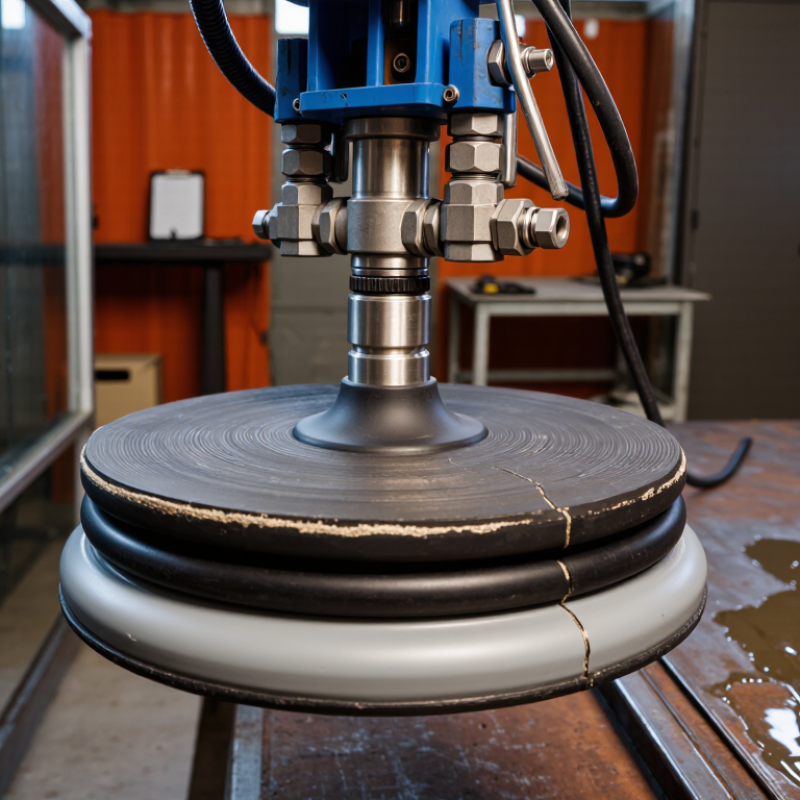
A vacuum lift suction pad has no universal expiration date. Its service life depends on seven interacting factors: rubber compound, temperature, ozone, ultraviolet exposure, chemicals, load cycles, and storage. ASME B30.20-2021 requires frequent and periodic inspections, with intervals ranging from daily or monthly checks to inspections within twelve months. The standard does not promise a fixed lifespan.
Material condition matters most. ASTM D573 tests rubber aging under controlled heat, but laboratory results only compare compounds. They do not predict field life exactly. ISO 2230 also identifies heat, sunlight, ozone, humidity, and deformation as storage risks. A pad stored beside a sunny window may harden before a heavily used pad kept in a clean cabinet. Small cracks matter.
Check the sealing lip before every lift. Look for cuts, flattening, stiffness, swelling, or shiny hardened areas. A practical field rule is simple: if vacuum falls faster than the equipment specification allows, remove the pad from service. Record vacuum readings, lifting cycles, temperature, and replacement dates. This creates useful evidence, although records are often incomplete. That is a weakness worth admitting. Cleaning chemicals can also change rubber performance, even when the surface looks normal. Replace pads when inspection findings, test results, or manufacturer limits indicate reduced holding reliability, not merely because a calendar date has arrived.
| No. | Service-Life Factor | What Determines Service Life | Typical Practical Range | Recommended Practice |
|---|---|---|---|---|
| 1 | Pad Material | Rubber and elastomer compounds age at different rates. Oil, solvents, ozone, ultraviolet light, and heat can harden, swell, crack, or deform the sealing lip. | Approximately 6 months to 5 years, depending on material, environment, and usage. | Select a pad material compatible with the load and workplace conditions. Replace the pad when the sealing edge becomes brittle, permanently deformed, cracked, or swollen. |
| 2 | Operating Temperature | Continuous exposure to temperatures outside the pad specification accelerates elastomer aging and can reduce flexibility and sealing performance. | Many general-purpose pads operate near 5–60°C; specialty materials may support wider ranges. | Keep the pad within the manufacturer’s rated temperature range. Avoid storing or operating it near hot surfaces, direct sunlight, or freezing conditions unless approved for that use. |
| 3 | Surface Condition of the Load | Rough, dirty, porous, oily, wet, or uneven surfaces increase leakage and cause the sealing lip to flex and wear more often. | Smooth, clean, nonporous surfaces generally produce the lowest wear; porous or textured surfaces can substantially shorten pad life. | Clean both the pad and the load before use. Do not drag the pad across abrasive surfaces, sharp edges, weld spatter, or burrs. |
| 4 | Lifting Frequency and Duty Cycle | Frequent pick-and-place cycles, repeated vacuum release, and long operating hours increase mechanical fatigue and surface wear. | Low-use applications may last several years; high-cycle applications may require replacement within months or after a defined cycle count. | Record operating cycles and establish a preventive replacement interval based on inspection results, leakage trends, and the equipment duty cycle. |
| 5 | Load, Shear, and Misalignment | Excessive weight, side loading, twisting, sudden acceleration, or an off-center load can distort the pad and damage the sealing lip. | Service life is longest when the load remains within the rated capacity and is lifted vertically without shock loading. | Stay within the rated working load and safety factor. Center the pad, minimize lateral forces, and avoid sudden starts, stops, and impacts. |
| 6 | Vacuum Quality and Leakage | Insufficient vacuum, blocked filters, damaged hoses, loose fittings, or a poor seal can make the pad work harder and increase deformation and heat buildup. | A gradual increase in leakage or a longer time to reach the required vacuum is an early indication of wear or system problems. | Inspect hoses, filters, valves, and fittings regularly. Monitor vacuum level and evacuation time, and investigate any abnormal change before continued operation. |
| 7 | Cleaning, Storage, and Inspection | Improper cleaning, folded storage, contact with sharp objects, and skipped inspections can cause permanent deformation or unnoticed damage. | A visual inspection before each shift and a detailed inspection at least monthly are common minimum practices for regular use. | Clean with a compatible mild detergent, dry thoroughly, store flat in a cool dark place, and replace immediately if cuts, tears, hardening, or loss of grip is found. |
Note: The service-life ranges are general engineering estimates rather than guarantees. The actual replacement interval should be based on the pad material, operating conditions, inspection results, vacuum performance, and the lifting equipment manufacturer’s safety requirements.
Service life varies with load, heat, surface texture, cleaning, and storage. A clean, flexible pad may last years. Damaged rubber may fail within months. There is no universal replacement date.
Check the sealing lip for cuts, flat spots, cracks, hardening, swelling, and embedded dust. Inspect hoses, fittings, valves, and the vacuum gauge. Look closely. A pad can appear normal and still leak.
Rough steel, sharp edges, oily panels, and hot glass can accelerate wear. Dust creates tiny leakage paths along the contact face. Clean and dry both surfaces before lifting.
Repair may be reasonable for dirt, a loose hose, or a replaceable gasket. Clean the pad, tighten fittings, and test it without a load. Then test with a known, safe load. Do not repair torn rubber, deep grooves, or heat-warped bodies.
Replace it when the edge remains flattened, the material feels brittle, or vacuum recovery slows. Replacement is also needed after repeated vacuum loss or permanent deformation. Do not rely on yesterday’s performance.
Retire it if it slips during testing, exposes reinforcement, or cannot hold vacuum consistently. Isolate the pad before further lifting. A small crack can spread quickly. I once underestimated an edge nick.
Store pads flat in a cool, dry, shaded cabinet. Keep them away from ozone, solvents, sunlight, sparks, and extreme heat. Avoid folding or hanging them. Distortion may become permanent.
Record inspection dates, operating hours, load type, temperature, cleaning methods, and vacuum-hold results. Note slow pressure drops and unusual failures. Records help reveal gradual wear, but they are not perfect. When history is incomplete, replacing sooner is safer than guessing.
What is the lifespan of a vacuum lift suction pad? Its service life depends on the pad’s material, operating environment, workload, maintenance routine, and storage conditions. Frequent lifting, rough or dusty surfaces, extreme temperatures, chemical exposure, excessive stretching, and improper handling can accelerate wear. To assess performance, regularly inspect the pad for cracks, hardening, deformation, cuts, surface contamination, and loss of flexibility. Changes in vacuum holding time, lifting stability, or sealing performance may also indicate deterioration.
Seven practical factors can extend pad life: use the correct pad for the load and surface, keep contact areas clean, avoid sharp edges and excessive loads, operate within recommended temperature limits, protect the pad from chemicals and sunlight, store it flat in a clean and dry location, and perform routine inspections. Repair may be suitable for minor, non-structural issues, but pads with severe damage, permanent deformation, repeated vacuum loss, or uncertain reliability should be replaced or retired to maintain safe and consistent lifting performance.

 Bendo Lift