Industrial vacuum lifts make heavy loads feel almost weightless, but their pumps, exhaust ports, and moving air can create a steady shop-floor roar. What are the noise level standards for industrial vacuum lifts? The answer depends on the equipment, measurement method, worker exposure time, and applicable workplace rules. There is no single global limit designed specifically for every vacuum lift.
Occupational-noise researcher Dr. Alice H. Suter’s work offers a useful reminder: sound level must be considered alongside exposure duration. A brief reading beside a pump may not reflect a full shift near the lifting station. Small details matter. A worn silencer, a vibrating steel frame, or an open factory door can change what workers hear.
This guide examines ten standards, guidelines, and measurement references relevant to industrial vacuum-lift noise. It distinguishes workplace exposure limits from product-emission test methods, including widely used OSHA and NIOSH criteria and ISO measurement standards. The distinction is important: a machine’s sound rating does not automatically describe a worker’s daily exposure. A ranked list can still oversimplify a noisy, changing workspace. Use it as a starting point, then compare the cited criteria with measured conditions, manufacturer data, and qualified occupational-safety advice.
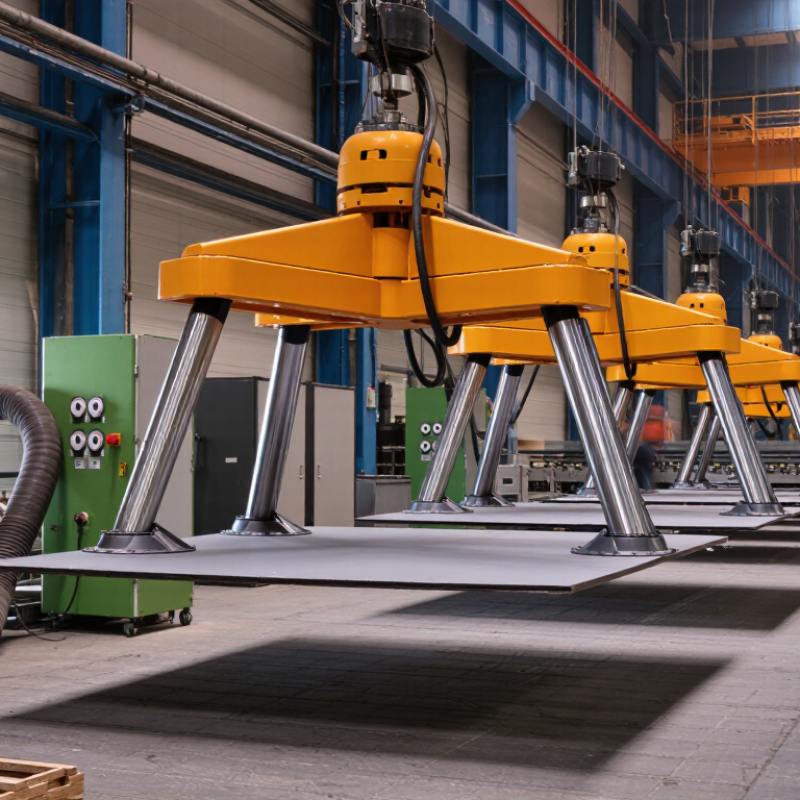
Understanding noise levels in industrial vacuum lifts requires more than reading one number on a machine label. Sound changes with vacuum pressure, load weight, floor materials, and maintenance quality. A worn seal may create a sharp hiss, while a vibrating pump can produce a deeper, steady hum.
Use calibrated equipment and record A-weighted decibels, written as dB(A). Measure near the operator’s ear, not only beside the vacuum generator. Common references include ISO 3744 for sound power testing and ISO 11201 for emission measurements in workplace conditions. Occupational limits vary by jurisdiction, so local requirements must be checked. Many safety programs treat 85 dB(A) over an eight-hour shift as an action level, while some regulations use 90 dB(A) for permissible exposure.
In a real plant, background conveyors can distort results. Take readings during lifting, releasing, idling, and emergency-stop tests. Record distance, load, room size, and operating cycle. These details make later comparisons reliable. Hearing protection may help, but it should not replace engineering controls. Enclosures, resilient mounts, quieter valves, and preventive seal replacement often reduce noise at its source.
A practical mistake is trusting a single test. Temperature and load conditions can change the result. Repeat measurements on different shifts. Small details matter. A quiet reading during an empty lift may hide the louder sound produced under a full, uneven load. Review results with a qualified safety professional before changing exposure controls.
Industrial vacuum lifts should be evaluated by sound pressure, not by motor noise alone. Sound pressure level is measured in decibels, usually dB(A), which reflects human hearing sensitivity. The reference pressure is 20 micropascals. Small details matter. A loose hose can create a sharp whistle near the operator’s ear.
For reliable results, use a calibrated sound level meter, preferably Class 1 or Class 2 equipment. Record readings at the operator’s position, commonly one metre from the lift, and keep the microphone away from walls or large metal surfaces. Measure background noise before testing. Then test lifting, holding, releasing, and idle conditions. Note both the equivalent level, Leq, and short peaks. A reading of 78 dB(A) during lifting may hide brief peaks above 85 dB(A). Those peaks deserve attention.
Relevant methods may include ISO 11201 for sound pressure near machinery and ISO 3744 for sound power testing in controlled environments. Workplace limits can differ by country, task duration, and exposure rules, so one number does not fit every facility. Keep the test record practical: date, load weight, floor type, distance, weather conditions, and meter calibration status. In field measurements, operators sometimes stand closer than planned. That mistake can change the result significantly. Repeating the test is wise, although production schedules rarely make it convenient. Noise control may involve quieter exhaust routing, vibration isolation, or maintenance of worn seals. The measurement should guide the fix.
Industrial vacuum lifts can sound modest in a showroom, yet their pumps, exhausts, and released air may raise noise near the operator’s ear. Ten workplace noise standards and guidance documents deserve attention: OSHA 29 CFR 1910.95, the NIOSH Recommended Exposure Limit, EU Directive 2003/10/EC, and the UK Control of Noise at Work Regulations. Measurement methods include ISO 11201, ISO 11202, ISO 11203, ISO 3744, ISO 9612, and ISO 11690-1. These documents address exposure limits, machine emissions, sound-power testing, and workplace noise control.
In practice, OSHA uses an 85 dBA action level and a 90 dBA eight-hour permissible limit, with a five-decibel exchange rate. NIOSH recommends 85 dBA over eight hours, using a stricter three-decibel exchange rate. EU and UK rules commonly trigger action around 80 and 85 dBA, while exposure limits require effective controls. Local rules still matter. Do not treat one reading as proof of safety. Reflective floors, narrow aisles, and multiple lifts can change exposure quickly.
Tips: Measure at the operator’s normal head position during lifting, not beside the motor alone. Record task duration, distance, and background noise. A calibrated dosimeter is useful for changing work patterns. Hearing protection may help, but quieter pumps, flexible mounts, enclosure treatment, and scheduled maintenance should come first. Small leaks are easy to overlook. They can produce a sharp hiss and distort the whole assessment.
Industrial vacuum lifts should be assessed against exposure limits, measurement rules, and working periods. OSHA commonly uses an 8-hour permissible exposure limit of 90 dBA, with a 5 dB exchange rate. NIOSH recommends 85 dBA over eight hours, using a 3 dB exchange rate. ACGIH guidance also emphasizes an 85 dBA, 8-hour threshold. These differences matter. A lift used for 30 minutes may appear acceptable, yet repeated short tasks can increase daily exposure.
European workplaces often apply an 87 dBA daily exposure limit, including hearing protection effects, while action levels begin lower. ISO 9612 supports personal noise-dose measurement, and ISO 11201 helps assess machinery emission levels near operators. IEC 61672 defines sound-level meter performance. ISO 3744 supports sound-power testing. Local occupational rules and construction guidance may add requirements. Measurements should identify A-weighted levels, C-weighted peaks, meter class, calibration status, and the exact operator position. One reading is not enough.
Tips: Measure beside the worker’s ear, not beside the motor. Record suction load, floor reflections, lift height, and task duration. Use a dosimeter for changing shifts. Recheck after maintenance. A clean filter may reduce noise, but this is not guaranteed. I have seen teams trust a quiet demonstration and overlook louder production cycles. That assumption needs challenging. Keep raw readings, calibration records, and exposure calculations together for reliable decisions.
Industrial vacuum lift selection should begin with measured noise, not marketing claims. A lift may create sound through its vacuum pump, exhaust, alarms, or contact with metal sheets. Measure the complete system at the operator’s position. Record dB(A), operating distance, load type, and duty cycle. Standards such as OSHA exposure limits, EU workplace noise requirements, and ISO acoustic measurement methods provide useful reference points. However, they do not replace a site-specific assessment.
Compare the measured level with your workplace action values before choosing equipment. A quieter pump can reduce hearing risk, communication problems, and operator fatigue. Enclosures, silencers, isolation mounts, and redirected exhaust may help. Do not block cooling airflow or weaken vacuum reliability.
Hearing protection can support the control plan, but it should not hide poor equipment selection. In practice, teams sometimes focus on lifting capacity and forget the sharp sound of repeated releases. That mistake is easy to make. It deserves review.
Tips: Request test data under realistic loads. Measure near the operator’s ear height. Check alarms separately. Inspect noise after maintenance. Train workers to report ringing ears, communication difficulty, or unusual vibration. Keep records for each lift and work area. A simple noise map can reveal that one station needs controls, while another needs a different lift. Recheck measurements when layouts, materials, or operating speeds change.
Common guidance uses 90 dBA over eight hours with a 5 dB exchange rate. Another approach uses 85 dBA over eight hours with a 3 dB exchange rate. Some workplaces apply an 87 dBA daily limit. Local rules may differ.
Yes. A 30-minute task may seem acceptable alone. Repeated lifts, releases, alarms, and nearby machinery can raise daily exposure. Short tasks add up.
Measure near the operator’s ear position. Do not measure only beside the vacuum motor. Record sound level, distance, load type, lift height, and task duration.
Record A-weighted levels and C-weighted peak levels. Include meter class, calibration status, operating load, and worker location. Keep raw readings with exposure calculations.
No. One reading can miss louder production cycles. Use a dosimeter when shifts or tasks change frequently. Recheck after maintenance, layout changes, or speed adjustments.
Noise may come from the pump, exhaust, alarms, or metal contact. Floor reflections can increase sound near the operator. A clean filter may reduce noise, but this is not guaranteed.
Consider silencers, enclosures, isolation mounts, or redirected exhaust. Do not block cooling airflow. Do not weaken vacuum reliability. Hearing protection is support, not the whole solution.
Request test data under realistic loads and duty cycles. Ask for measurements at operator ear height. Check alarms and repeated releases separately. A quiet demonstration can mislead.
Workers should report ringing ears, communication difficulty, unusual vibration, or fatigue. These signs deserve prompt review. Our first assumption may be wrong. Recheck the equipment and work area.
This article examines the question, “What are the noise level standards for industrial vacuum lifts?” It explains how vacuum lifting equipment produces sound through pumps, airflow, valves, and mechanical movement, and why noise should be evaluated using decibels, sound pressure levels, and standardized measurement conditions. The discussion introduces ten workplace noise standards and guidance areas relevant to industrial vacuum lifts, including permissible exposure limits, hearing protection requirements, risk assessment, equipment testing, and workplace monitoring.
The article also compares how different standards define exposure limits, measurement methods, averaging periods, peak sound levels, and daily work durations. Finally, it shows how these requirements can support lift selection and workplace controls, such as choosing quieter equipment, improving maintenance, isolating noise sources, limiting exposure time, providing hearing protection, and training employees. Together, these practices help organizations manage noise risks while maintaining safe, efficient, and compliant lifting operations.

Bendo Lift