Why are ergonomic lifts essential for aging workforces? Because repeated bending, overhead reaching, and manual lifting can make demanding tasks harder to sustain. The effects differ from worker to worker; age alone does not determine ability. Still, a lift table, vacuum lifter, or powered hoist can reduce effort during a real shift, especially when loads are bulky or handled repeatedly. Small changes matter.
Cornell ergonomics professor Alan Hedge describes the core principle this way: “Ergonomics is the science of fitting the job to the worker, rather than forcing the worker to fit the job.” That principle guides this look at China’s top 10 ergonomic lifts for aging workforces. The aim is not to treat older employees as fragile. It is to assess whether equipment can help workers handle materials with less strain and more control.
A useful comparison should go beyond price and rated capacity. Check platform height, usable reach, controls, guarding, stability, and access for maintenance. Ask how the lift performs with the actual load, in the actual workspace. A brochure cannot answer everything. Nor should a product’s origin alone stand in for verified safety documentation, service support, or a suitable fit. Some workplaces may need a simple height-adjustable table; others may need a powered lifting aid. The right choice depends on the task and the people doing it. And there is no perfect ranking. This guide offers a practical starting point, while recognizing that trial use and worker feedback can reveal what a spec sheet misses.
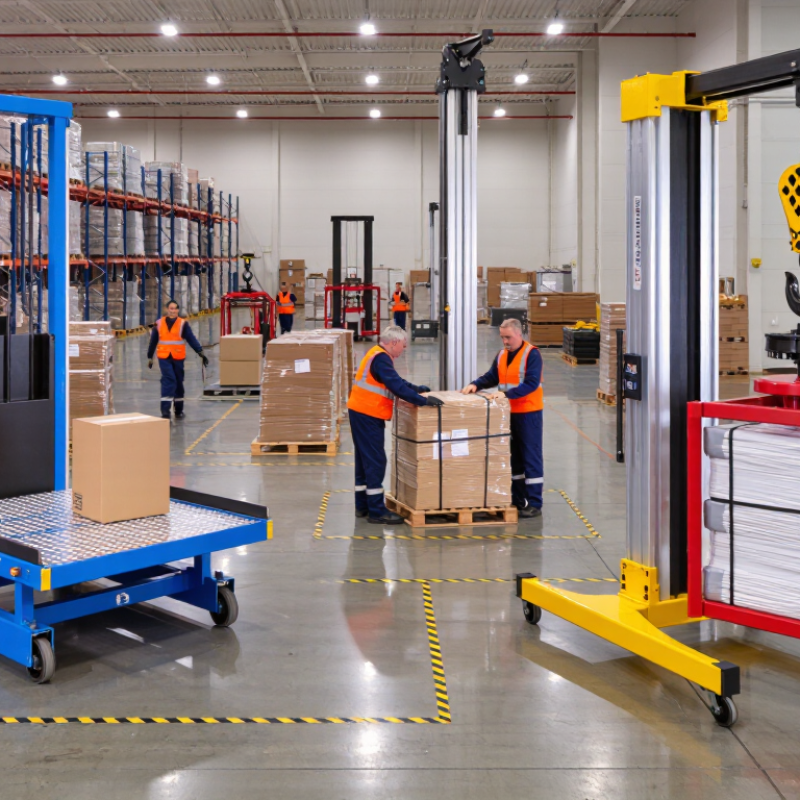
Ergonomic lifts are devices that raise, lower, or reposition loads with less manual effort. Examples include lift tables, hoists, and powered carts. They can reduce repeated bending and heavy carrying while keeping materials near a worker’s waist. This matters as more people work later in life: the U.S. Bureau of Labor Statistics projects that adults aged 55 and older will make up 24.8% of the labor force in 2032. Age alone does not determine ability, but some workers may benefit from equipment that reduces physical strain.
The need is measurable. Liberty Mutual’s 2023 Workplace Safety Index estimated that overexertion involving outside sources cost U.S. employers $12.8 billion in direct workers’ compensation costs in 2021. A lift can help, but only when it fits the task, load, and work area. A poorly placed control or a platform that sits too high may create new awkward movements. It is not a cure-all. Workers should test equipment with real loads and give feedback; small adjustments often matter.
Tips: Set lift height near waist level, keep controls within easy reach, and check the rated capacity. Train workers on safe use, including turning and lowering loads. Observe the task afterward; real work can expose problems a checklist misses.
As China’s workforce ages, safer material handling becomes a practical need, not a perk. Age alone does not determine a worker’s strength or ability, but physical capacity can change over time. A heavy carton lifted from floor level, a low pallet, or a long reach across a bench can strain backs and shoulders. Repeated shifts make small awkward movements matter.
Ergonomic lifts, height-adjustable worktables, and pallet positioners can bring loads closer to a comfortable working height. A lift table, for example, can reduce repeated bending when workers transfer parts between a pallet and a bench. Controls should be easy to reach and understand, with enough space for safe positioning. Fit matters. Workers of different heights and abilities should be able to use the equipment comfortably.
Choosing equipment requires observing the actual task: load weight, travel distance, floor condition, and how often the lift is used. Ask workers where fatigue builds during a shift, then test adjustments before expanding them. Maintenance and hands-on training matter too; even a well-designed lift can create awkward movement if placed poorly. No device fixes a rushed workflow. That is worth remembering. A safer setup may take more planning than expected, and the first choice may not suit every worker.
Material-handling equipment can reduce repeated lifting, carrying, and awkward postures. The options below are common equipment types, not a brand ranking. Rated capacities are indicative ranges; actual limits depend on the model, load, lift height, and operating conditions. Always follow the equipment rating and workplace risk assessment.
| Material-Handling Solution | Indicative Rated Capacity | Typical Task | Ergonomic Benefit | Key Selection and Safety Considerations |
|---|---|---|---|---|
| 1. Electric pallet truck | About 1.5–3 tonnes | Moving palletized goods over short warehouse or production-floor distances. | Powered travel reduces the pushing and pulling effort required compared with a manual pallet truck. | Check aisle width, floor condition, braking, tiller controls, visibility, and pedestrian separation. |
| 2. Electric walkie stacker | About 1–2 tonnes | Lifting and stacking pallet loads at shelves or workstations. | Powered lift and travel limit manual force and repeated bending during pallet handling. | Confirm capacity at the required lift height, load-center limits, mast clearance, and operator training needs. |
| 3. Scissor lift table | Commonly about 0.5–2 tonnes | Raising or lowering pallets, bins, and components to a convenient work height. | Helps reduce floor-level lifting and sustained bending when loading or unloading. | Use appropriate guarding or bellows where needed; assess pinch points, platform size, stability, and safe loading. |
| 4. Mobile lift table | Commonly about 150–1,000 kg | Positioning cartons, tools, or components between a cart and a workstation. | Brings loads closer to the worker and can reduce low-level reaching and manual transfers. | Check wheel locks, load stability, handle design, travel route, and the intended working-height range. |
| 5. Electric hoist with workstation crane | Often about 125–1,000 kg for light-duty workstation applications | Lifting dies, motors, fixtures, or other heavy items within a defined work area. | The hoist carries the load, reducing manual lifting and holding effort. | Verify support structure, rated capacity, inspection requirements, load path, and controls suited to the task. |
| 6. Vacuum tube lifter | Often about 20–250 kg, depending on the system and attachment | Frequent lifting of cartons, sacks, sheets, or other compatible loads. | Can reduce strenuous lifting and make repeated pick-and-place movements easier. | Match the suction attachment to the load surface; assess vacuum loss protection and safe release procedures. |
| 7. Articulating jib crane with hoist | Commonly about 125–1,000 kg in light-duty applications | Moving loads between nearby workstations or around equipment and fixtures. | Supports local lifting without requiring workers to carry heavy items between stations. | Check mounting strength, working radius, clearance, rotation limits, and the load rating at the applicable reach. |
| 8. Overhead bridge crane | Capacity is installation-specific; systems range from light loads to many tonnes | Moving heavy or bulky loads across a production bay or warehouse. | Transfers substantial lifting effort from workers to powered equipment. | Requires engineered runway support, trained operators, planned lifting routes, inspections, and exclusion zones. |
| 9. Powered manipulator or ergonomic handling arm | Task-specific; commonly designed for loads from tens to several hundred kilograms | Guiding irregular, bulky, or repetitive loads through a controlled assembly or packing task. | Can balance the load and reduce the force needed to position it precisely. | Specify the end effector, reach, load balance, controls, and safe behavior if power or air supply is lost. |
| 10. Drum lifter and rotator | Often about 200–500 kg, subject to drum size and attachment design | Raising, transporting, or tilting drums for storage, processing, or dispensing. | Avoids manually lifting and tipping heavy drums, which can be difficult to control. | Confirm compatibility with drum material and dimensions, secure gripping, spill controls, and the required turning method. |
Practical note: Equipment selection should consider the load’s weight and shape, lift frequency, travel distance, worker reach and posture, floor conditions, and maintenance needs. Training, clear routes, and safe work procedures remain essential.
Assess an ergonomic lift by matching its rated capacity to the heaviest routine load, not an occasional best-case estimate. Check lift height against the actual work surface, pallet, or vehicle bed. The operator should keep the load close and avoid twisting. Small details matter. Test controls while wearing work gloves, and check whether the lift moves smoothly over floor joints and ramps.
For an aging workforce, invite employees of different heights and abilities to try the lift during a normal task. Watch for raised shoulders, bent wrists, repeated reaching, and hesitation near pinch points. Ask whether handles, brakes, and release controls are easy to see and use. Comfort varies. One person’s easy reach may strain another, so record feedback rather than relying on a brief demonstration.
Assess turning space, visibility, noise, power access, and safe parking. Review maintenance intervals and inspect wheels, guards, and emergency stops according to the manufacturer’s instructions. Compare task time and reported effort before and after a trial, while recognizing that one shift may not reveal every issue. A neat score sheet helps, but it can miss awkward moments workers stop mentioning.
Across Chinese factories, warehouses, and construction sites, lift selection should match the task, load, and floor space. Useful options include scissor lifts for low-level work, vertical mast lifts for narrow aisles, boom lifts for overhead access, and personnel lifts for maintenance. Vacuum lifters help move glass or sheet materials; ergonomic manipulators support repetitive handling. Jib cranes serve fixed workstations, while gantry cranes cover larger bays. Mobile column lifts raise vehicles, and powered stair-climbing lifts help move equipment between levels. EU-OSHA’s 2022 OSH Pulse survey found that three in five workers reported musculoskeletal disorders. That is a warning sign, not a China-specific measurement.
Tips: Check load weight, reach, turning space, and surface conditions before choosing a lift. Watch an operator handle a real load; a neat specification sheet may miss awkward wrist angles or blocked sightlines. No single lift fits every line. Even a well-chosen device can create new risks if workers rush or receive little practice.
Track near misses, task cycle time, and worker discomfort after installation. Record the results by task and shift, then review them with operators. This evidence can reveal whether the lift reduces strain—or simply moves the difficult part elsewhere.
Selecting an ergonomic lift begins with watching the work, not browsing a product list. Note load weight, lift height, travel distance, and how often each task occurs. A worker moving cartons from floor level needs a different solution from someone positioning parts beside a waist-high bench. Ask employees where strain builds up. Their answers may challenge the original plan.
Match the lift to the task and workspace. Scissor tables can raise pallets to a comfortable working height, while vacuum or hoist systems may help with repetitive handling. Check capacity, controls, stability, and clearance around doors and aisles. Test the equipment with typical loads, not just an empty unit. Small details matter. A control placed awkwardly can turn a useful lift into another source of strain.
Implementation takes more than delivery and installation. Let workers practice with realistic loads, and make adjustment steps clear. Observe the lift in daily use during the first weeks. Is it reducing reaches, twisting, or hurried manual handling? Track maintenance needs and ask for feedback from workers of different heights and abilities. The first setup may be wrong. Be ready to adjust the lift position, workflow, or training rather than assuming the equipment solved everything.
Physical ability varies between workers and can change over time. Repeatedly lifting cartons from floor level may strain backs and shoulders.
No. Workers differ in strength, comfort, and ability. Observe the task and ask workers where fatigue builds.
Lift tables, adjustable worktables, and pallet positioners can bring loads closer to a comfortable height. A lift table can help when moving parts between a pallet and a bench.
Check load weight, lift height, travel distance, and task frequency. Match the equipment to the actual job, not just a product list.
Use typical loads, not only an empty unit. Check controls, stability, aisle clearance, and whether workers can position themselves comfortably.
Ask where strain builds during a shift. Their feedback may challenge the original plan. That can be useful.
Let workers practice with realistic loads and clear adjustment steps. Watch daily use during the first weeks, then review maintenance and feedback.
No. Poor placement or a rushed workflow can still cause awkward movement. The first setup may be wrong. Adjust it when needed.
This article explains what ergonomic lifts are and how they can help aging workers handle materials with less physical strain. Why are ergonomic lifts essential for aging workforces? As employees grow older, repetitive lifting, awkward reaching, and moving heavy loads can become more demanding. Well-chosen lift equipment can make these tasks easier, support safer work practices, and help workers remain comfortable and productive.
For Chinese workplaces, the article outlines how to assess lifting needs by considering load weight, task frequency, available space, and the people using the equipment. It introduces ten types of ergonomic lifts, from adjustable work-positioning solutions to equipment designed for moving and raising loads. The final section offers practical guidance on selecting and implementing suitable options, including matching equipment to specific tasks, providing user training, and reviewing results over time. The goal is to create material-handling processes that better support workers at every career stage.

Bendo Lift