Why Choose China Best Battery Lifts for Outdoor Construction?

Time:2026-10-10 Author:Ethan
0%

Outdoor construction demands equipment that can move safely across changing ground, weather, and work schedules. China’s best battery lifts are designed for contractors who need clean, quiet, and practical vertical access. They support tasks such as façade installation, lighting work, warehouse expansion, and building maintenance. Their value becomes clearer where engine noise, exhaust fumes, or limited indoor ventilation create unnecessary problems.

Why use a battery-powered lift for outdoor construction? Battery power reduces local emissions and supports quieter job sites near offices, schools, and residential areas. Modern electric lifts can provide steady movement, compact turning, and useful operating time between charges. Some models also include non-marking tires, automatic leveling, emergency lowering, and overload protection. These details matter when workers carry tools several meters above uneven concrete.

Field experience still requires careful judgment. A battery lift is not automatically the best choice for every project. Slope, wind, temperature, platform capacity, and charging access must be checked before selection. Weather changes fast. That fact is easy to overlook. Reliable suppliers should provide clear specifications, inspection guidance, service support, and documented safety information. Buyers should also confirm that the lift matches local workplace requirements and manufacturer instructions.

China has a broad manufacturing base, but quality varies between suppliers. A professional comparison should examine battery chemistry, charging speed, hydraulic performance, control response, spare-parts availability, and warranty terms. A lower purchase price may become expensive when downtime appears. No lift is perfect. The strongest choice combines tested performance, suitable configuration, responsive support, and honest evaluation of site conditions.
Why Choose China Best Battery Lifts for Outdoor Construction?

Lift Types and Key Specs: 6–12 m Platforms and 200–450 kg Capacity

Why Choose China Best Battery Lifts for Outdoor Construction?

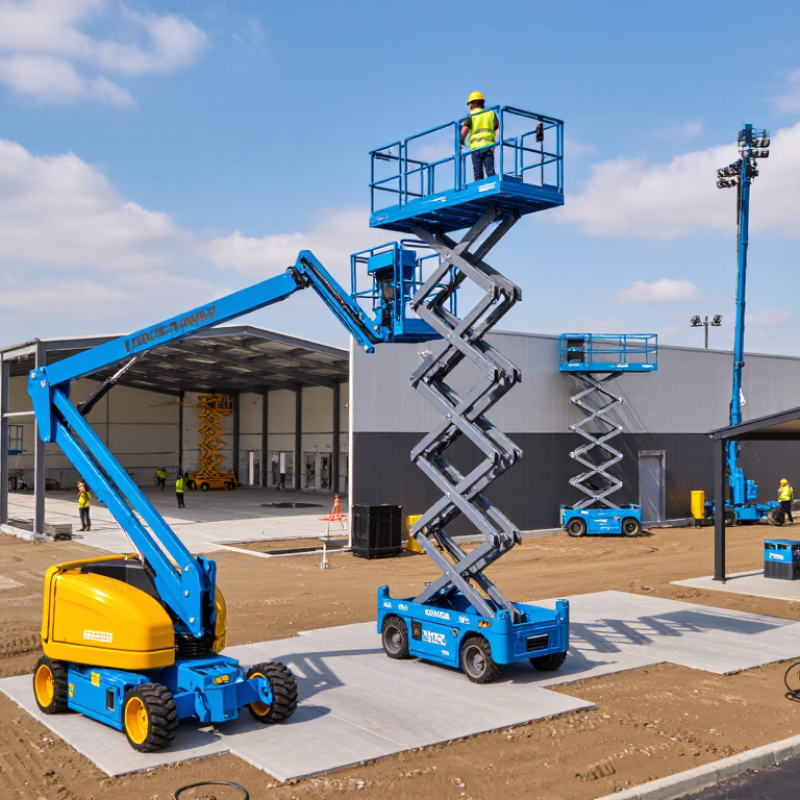
Outdoor construction needs compact access equipment that can handle uneven ground, changing weather, and frequent relocation. Scissor lifts suit broad platforms, while boom lifts reach over walls and obstacles. For most medium-height work, a 6–12 m platform covers facade repairs, lighting, steel installation, and warehouse expansion. The practical question is not maximum height. It is whether the working height matches the task without sacrificing stability.

Capacity usually ranges from 200 to 450 kg, including workers, tools, and materials. A two-person crew with panels can exceed 300 kg quickly. Check platform dimensions, gradeability, turning radius, and emergency lowering systems. Battery operation reduces on-site exhaust and noise, especially near occupied buildings. The International Energy Agency reported that China held more than 80% of global battery cell manufacturing capacity in 2023, supporting broad supply access and competitive component sourcing. Quality still varies.

Safety deserves harder attention. The IPAF Global Safety Report recorded 118 powered access fatalities across 20 countries in 2023. That figure does not prove battery lifts are unsafe, but it shows that training and daily inspections remain essential. Look for overload protection, pothole protection, platform leveling, and clear battery diagnostics. In my field experience, stated capacity can look impressive until uneven ground changes the working conditions. A lift that is cheaper may also need more careful verification.

Battery Performance: 8–12 h Runtime and 2,000+ Lithium-Ion Cycles

Why Choose China Best Battery Lifts for Outdoor Construction?

Battery Performance: 8–12 h Runtime and 2,000+ Lithium-Ion Cycles

Outdoor construction punishes weak battery planning. An advertised 8–12-hour runtime can support a full shift, but only under defined working conditions. Lift height, payload, cold weather, slopes, and hydraulic demand change the result. Buyers should request performance data under rated load, rather than relying on idle testing. Small detail. Big difference.

The International Energy Agency’s Global EV Outlook 2024 reports that global battery demand exceeded 750 GWh in 2023. This scale shows lithium-ion technology has matured, but it does not guarantee every battery will deliver 2,000 cycles. The U.S. Department of Energy’s Energy Storage Grand Challenge Roadmap identifies cycle life, thermal control, and usable capacity as major lifecycle-cost factors. For outdoor lifts, 2,000+ cycles is a practical purchasing benchmark, not an automatic promise.

Real sites are messier. Frequent deep discharges, high charging temperatures, and poor storage can shorten battery life. A lift may show eight hours on paper, yet deliver less during winter work or heavy positioning. Better systems include battery management, temperature monitoring, regenerative charging, and clear state-of-charge displays. Operators should also compare charge time, replacement access, and verified cycle-test conditions. I would question any supplier that reports cycle numbers without defining depth of discharge. That missing detail matters.

Outdoor Safety: ANSI A92.20 Design and A92.22 Safe-Use Standards

Why Choose China Best Battery Lifts for Outdoor Construction?

Outdoor construction demands more than lifting height and battery capacity. A reliable battery lift should reflect ANSI A92.20 design principles, including stable platforms, guarded controls, emergency lowering, and clear load ratings. These details matter beside uneven concrete, temporary barriers, and changing weather. A lift may look strong, yet poor access design can create daily risks.

ANSI A92.22 focuses on safe use throughout the machine’s working life. Operators need documented training, pre-start inspections, site risk assessments, and correct positioning before elevation. Check tires, batteries, guardrails, alarms, and emergency systems every shift. Keep the platform within its rated capacity. Never treat a warning alarm as background noise.

Outdoor work is rarely perfectly controlled. Wind can rise quickly. Mud can hide weak ground. A supervisor should verify surface conditions before each move, not rely only on yesterday’s inspection. Battery-powered lifts reduce engine emissions and noise, but they still require charging controls and weather protection. Wet connectors can become a serious concern.

There is no flawless lift.

Responsible selection also means reviewing service records, operator access, spare-part support, and compliance documentation. A lower purchase price may become expensive when inspections are delayed or training is unclear. Design compliance supports safety, but disciplined daily use makes the difference. Local regulations and site procedures must still be checked before operation.

Operating Costs: Zero Tailpipe Emissions and Lower Noise Than Diesel

Why Choose China’s Best Battery Lifts for Outdoor Construction?

Battery-powered lifts remove tailpipe emissions at the worksite. No exhaust plume gathers beside a school, tunnel, or residential entrance. This matters during long shifts and enclosed-area preparation. The U.S. Department of Energy reports that electric equipment generally reduces fuel and maintenance costs through fewer moving parts. The International Energy Agency also recorded a 14% fall in average lithium-ion battery-pack prices in 2023. Lower battery costs can improve rental economics, although charging infrastructure still requires planning.

Noise is another practical advantage. Diesel engines often dominate a quiet site with idling, vibration, and repeated acceleration. Battery lifts mainly produce hydraulic, motor, and tire sounds. NIOSH identifies 85 dBA over eight hours as a recommended exposure limit, so quieter equipment can support easier communication and lower worker fatigue. Real results vary. Surface type, alarms, hydraulic load, and nearby machinery can change measured noise levels. I would not promise silence.

Tips: Check the lift’s measured operating noise, not only brochure claims. Compare electricity and diesel prices locally. Record charging time during winter testing. The IEA notes that electricity generation still creates upstream emissions, so a zero-tailpipe claim is not a zero-carbon claim. Choose lithium battery capacity for the full shift, plus a realistic reserve. A small reserve prevents expensive mid-day downtime.

Site Fit: Gradeability, Wind Limits, IP Ratings, and Electric Drive

Choosing China-made battery lifts for outdoor construction requires more than comparing platform height or purchase price. Site fit matters. A machine rated for a steep slope may perform differently with a full load, wet ground, or loose gravel. Check the gradeability rating under working conditions, not only the brochure figure. Measure twice.

Wind limits deserve equal attention. A lift operating beside an unfinished façade faces gusts, air tunnels, and sudden pressure changes. Confirm the permitted wind speed at full platform height. Use a reliable anemometer on exposed sites. Never treat a lower wind reading as permanent safety clearance.

Ingress protection also affects daily reliability. An IP-rated enclosure can resist dust or water, but the rating has specific testing limits. IP65, for example, does not mean safe operation during every storm or flooding event. Inspect charging ports, battery covers, and cable seals after muddy shifts. Electric drive systems provide quiet movement and zero exhaust at the work area, which suits enclosed courtyards and sensitive projects. Yet traction can weaken on ramps when batteries are cold or nearly depleted. I would not rely on stated range alone. Test climbing, braking, and turning with the intended load before approval. Keep a charging plan nearby, because productivity often fails between shifts, not during them.

FAQS

Can a battery lift really operate for 8–12 hours?

It may support a full shift under defined conditions. Rated load, lift height, slopes, cold weather, and hydraulic demand reduce runtime. Request tested data, not idle results. A small reserve matters.

Does 2,000+ cycles guarantee long battery life?

No. It is a purchasing benchmark, not an automatic promise. Confirm depth of discharge, temperature, test method, and usable capacity. Deep discharges and hot charging can shorten service life. The number alone is incomplete.

What features support outdoor battery lift safety?

Look for guarded controls, stable platforms, emergency lowering, alarms, and clear load ratings. Check tires, guardrails, batteries, and emergency systems each shift. Wet connectors need protection. Nothing is flawless.

What should operators inspect before moving the lift?

Check training, ground conditions, wind, barriers, tires, guardrails, alarms, and rated capacity. Mud can hide weak ground. Verify conditions before every move. Yesterday’s inspection is not enough.

Do battery lifts eliminate emissions?

They remove tailpipe emissions at the worksite. They do not create zero-carbon operation because electricity generation may produce upstream emissions. That distinction matters near schools, tunnels, and homes. Avoid overselling the benefit.

Are battery lifts silent during construction work?

No. Hydraulic systems, motors, tires, and alarms still produce sound. Noise varies with surface type and load. Compare measured operating noise, not brochure claims. Quieter, not silent.

How can owners control battery lift operating costs?

Compare electricity and diesel prices, charging time, maintenance, replacement access, and spare-part support. Fewer moving parts may reduce maintenance. Charging infrastructure still costs money. A cheap purchase can become expensive.

What should buyers ask suppliers before purchasing?

Ask for rated-load runtime, cycle-test conditions, charge time, thermal controls, and compliance documents. Review service records and training support. I would question undefined cycle figures. Missing details matter.

Which standards and procedures should guide outdoor use?

Review applicable design and safe-use standards, including platform stability, controls, emergency systems, inspections, and operator training. Site procedures and local requirements still apply. Compliance helps, but daily discipline decides safety.

Conclusion

Battery-powered lifts are a practical choice for outdoor construction because they combine reliable access, efficient operation, and lower environmental impact. Why use a battery-powered lift for outdoor construction? These lifts commonly provide working platforms from 6 to 12 meters and support loads of approximately 200 to 450 kilograms, making them suitable for installation, maintenance, and finishing tasks. Modern lithium-ion batteries can deliver 8 to 12 hours of operation and more than 2,000 charge cycles, helping reduce interruptions and replacement costs.

Designed for demanding job sites, these lifts can follow ANSI A92.20 design principles and ANSI A92.22 safe-use practices when properly operated and maintained. They produce zero tailpipe emissions and less noise than diesel-powered equipment, which improves comfort and supports cleaner work areas. Before selection, contractors should assess gradeability, wind limits, IP protection ratings, and electric-drive performance to ensure the lift matches terrain, weather, and site conditions.

Ethan

Ethan

Ethan is a seasoned marketing professional with a deep expertise in our company's innovative product line. With a passion for sharing knowledge and insights, he takes the lead in regularly updating our corporate blog, where he explores industry trends, product features, and effective marketing......